When it comes to managing conflict of interest within your organization, there’s no such thing as taking too many precautions. Written conflict of interest bylaws are a key core component for any company or organization that wants to prevent internal and external conflicts of interest from interfering with their operations and their ethical standards (so…ideally, all of them).
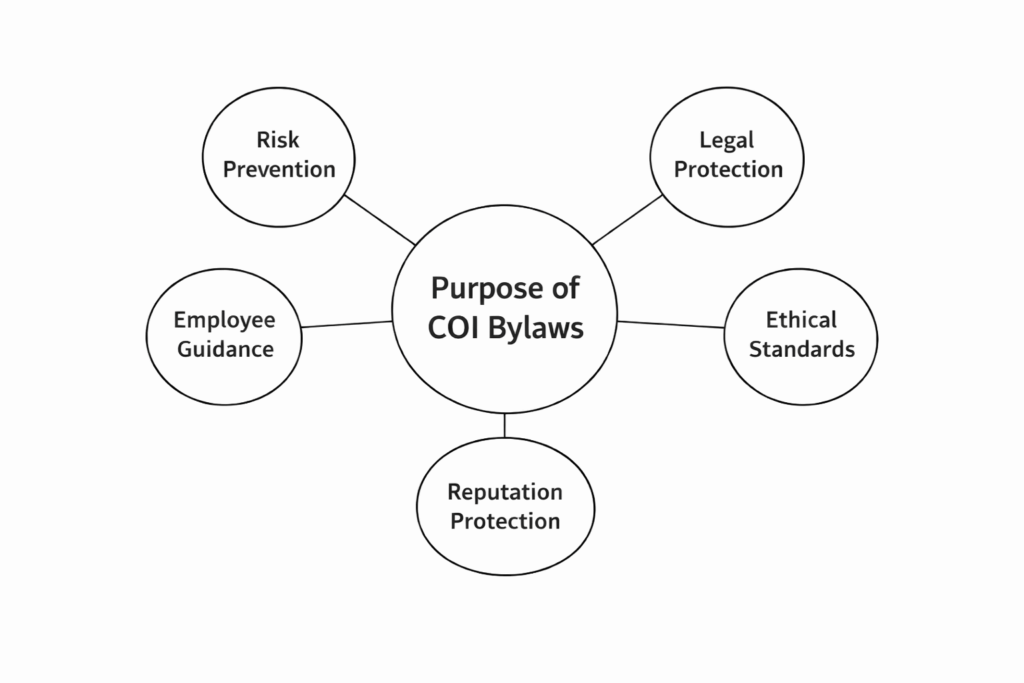
Conflict of interest bylaws serve to help your company avoid legal liability in the event of a COI-related dispute. Furthermore, they protect your employees by ensuring that workers aren’t being put into situations that might damage your company’s reputation or its brand if something goes wrong.
If your workplace doesn’t currently have conflict of interest bylaws in place, your employees may not know how to handle or disclose any conflicts that may arise. This makes it uncomfortably likely that they might not respond appropriately to any issues involving COI that might crop up within your organization.
In this article, ComplianceBridge will discuss conflict of interest bylaws and what they entail. We’ll also share five tips to hopefully help make writing effective conflict of interest bylaws for your business a breeze.
What are Conflict of Interest Bylaws?
When we talk about conflict of interest bylaws, we refer to provisions embedded in an organization’s governing documents. Conflict of interest bylaws in these documents serve to define expectations around COI for board members, officers, and key decision-makers within that organization.
While conflict of interest policies address day-to-day procedures regarding COI, bylaws create structural rules, which establish and address the company’s position regarding conflict of interest. COI bylaws should also define and identify common types of conflicts that could occur within the company (financial interests, related-party relationships, etc.). In essence, conflict of interest bylaws should set boundaries around COI, promote transparency, and help your business stay compliant with any relevant laws or industry regulations.
Tip #1: Identify Your Purpose
Before diving headfirst into writing your organization’s conflict of interest bylaws, identify what you need those bylaws to accomplish. Is it preventing conflicts? Minimizing the risks? Determining how to handle them? It’s not enough to just write something down; it needs to be something that aims to actually address and solve the problem. Keep in mind that conflict of interest bylaws should serve as a tool for protecting organizational interests, not a way of assigning blame.
Think about what’s going on in your organization, and write down all of the conflicts of interest that have occurred or could occur potentially. To get a fuller idea of what issues are at play, involve stakeholders and others with relevant expertise as necessary. After you’ve listed your company’s main pain points or potential pain points, define the needs for each issue: Why is it important to address this issue? What would happen if we didn’t do anything about it? What would happen if we did do something about it? How can we prevent these problems from happening in the first place?
Tip #2: Make A Plan
To ensure that the conflict of interest bylaws you create will be effective, come up with a plan of attack on how you will structure and write them. There are a lot of different ways to potentially go about doing this, but your priority should be bylaws that reflect the organizational structure and day-to-day reality of your company. Consider factors like board composition, company ownership models, and operational complexity (ie: conflict of interest bylaws for bigger companies, or companies with a high number of departments, or multi-leveled manager/leadership roles, will probably look a little different for smaller or less complex businesses).
You’ll also want to consider the industry your company occupies and its prominent business relationships. Conflict of interest bylaws for a health care company, for example, will probably read a little differently from those for a business in the real estate industry, and as well they should! The content of these bylaws should reflect the realities of your business and the wider industry around it, instead of just using generic language that fails to address possible real-world scenarios. If you want your conflict of interest bylaws to actually be of use, they should align with how decisions are actually made within your organization.
Remember, this doesn’t have to be a solo endeavor. In fact, the more you involve other people across different roles and departments, the more comprehensive and applicable your conflict of interest bylaws will be, company-wide. To that end, a good starting point for this stage is to identify relevant stakeholders and include them in the process. Make a list of what needs to be done and identify stakeholders interested in contributing to or reviewing your bylaws. It can be helpful to have meetings with these people before you start writing, so that they understand what their role will be and can guide you as needed.
Another important part of planning is determining what you’ll need to complete the project. Determine which, if any, resources will be required. How many hours will this project require? Do you need to consult with a legal expert? Mapping it out like this will help ensure that you have everything required when you begin writing, reducing the roadblocks you’ll encounter.
Tip #3: Address Understanding and Interpretation
Consider the actual written content of your conflict of interest bylaws, and how employees will understand and interpret them. Consider past instances of COI within your business; how were those conflicts misunderstood? If they went underreported, why did this occur? How can you explain and define COI, and processes around disclosure and mitigation, in ways that will help prevent those issues in the future?
Your best friend here will be clarity. You’re not writing an English essay or a complex legal document. Your main objective in crafting conflict of interest bylaws should be clear, effective communication that reaches as many stakeholders as possible. The most comprehensive and well-researched conflict of interest bylaws won’t be worth anything if your target audience can’t understand or interpret them. Clear, direct, specific, and consistent language reduces subjective interpretations of COI bylaws, and improves shared understanding across departments and leadership teams.
Tip #4: Encourage Accessibility and Employee Understanding
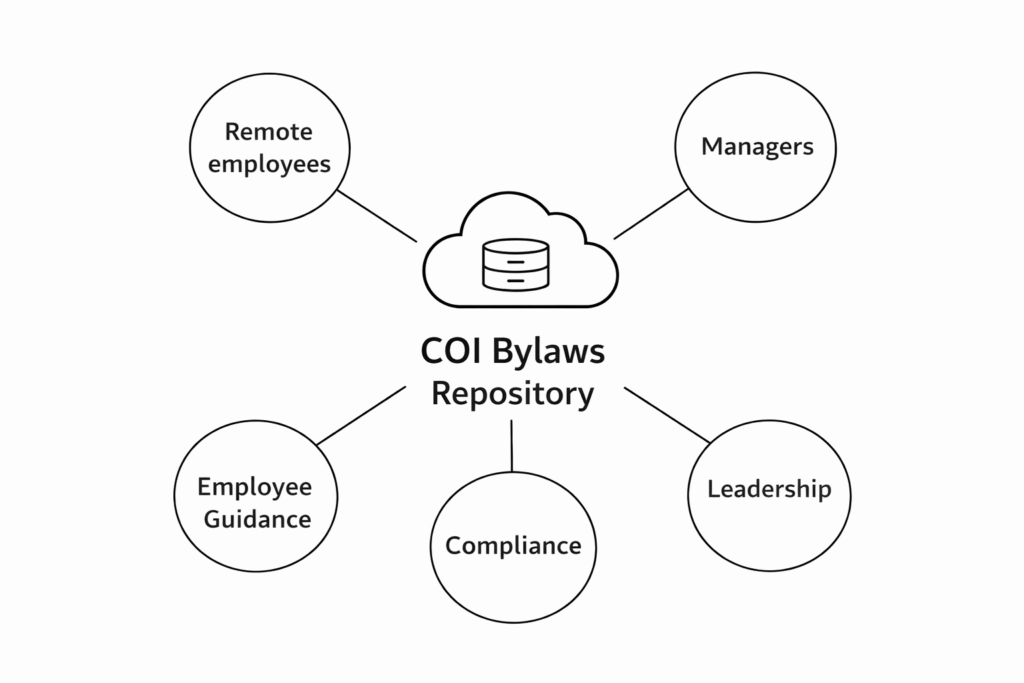
For your COI bylaws to be effective, your employees have to be able to reference them when they have questions. This means that you should make it possible for employees to easily access conflict of interest bylaws, regardless of where those employees might be. This is a safety precaution, not just courtesy toward your workers. If your staff cannot quickly locate the document that spells out what constitutes a conflict of interest at their organization, they may be forced to make decisions without all the facts. An excellent way to keep conflict of interest bylaws accessible to workers is by storing them in a cloud-based software system that can be accessed from anywhere.
Tip #5: Account for Change Over Time
Once written, conflict of interest bylaws should act as living documents, not reference-only artifacts. To facilitate this, it’s essential that your organization’s conflict of interest bylaws undergo regular periods of review.
The frequency of these review periods may vary based on the business, but at the very least you should review them annually or in the event of organizational changes, such as large-scale growth, leadership turnover, or new revenue models. Reviewing your bylaws regularly will help you keep them up-to-date with best practices, and reviewing them after any significant changes to your organization will ensure that all policies stay aligned with current needs.
After reviewing your current bylaws and making any necessary changes, update employees on what has changed so they can be made aware of any new requirements or restrictions that may impact them. To make sure that all employees have access to updated versions of their conflict of interest policy, we recommend sending out an email notification whenever a change is made or about to be made.
(Bonus) Tip #6: Manage COI Processes with ComplianceBridge!
When not effectively identified and mitigated, conflicts of interest have the potential to create serious risk for businesses. Conflict of interest bylaws work to meet and manage this risk, but COI management isn’t just a one-and-done deal. It’s an ongoing process, and ComplianceBridge is here with the necessary tools to make that process easier, simpler, and more efficient.
ComplianceBridge’s Conflict of Interest Software helps businesses automate and streamline COI disclosure, creating a hassle-free process. Create custom question sets, making your disclosure forms as simple or as complex as you need them to be. Our software supports a wide variety of question types, including short answer, multiple choice, yes/no or true/false, fill in the blank, and ranking. Employers can also add conditional questions, which only appear depending on how a previous question was answered, and weighted questions that give certain answers more importance during scoring.
ComplianceBridge gives users the ability to schedule collection periods, which can be set to recur at regular intervals. Once COI documents are distributed, our software displays results in real time, making it easy to spot trends or flag problem areas that may need more focused attention. Our real-time reporting and analytics dashboard allows organizations to export this data for further analysis in other applications, or for presentations.
Handling workplace conflict of interest may be an important process for you and your employees, but it doesn’t have to be a difficult or time-consuming one. Request a demo with ComplianceBridge today and find out how simple it can be!